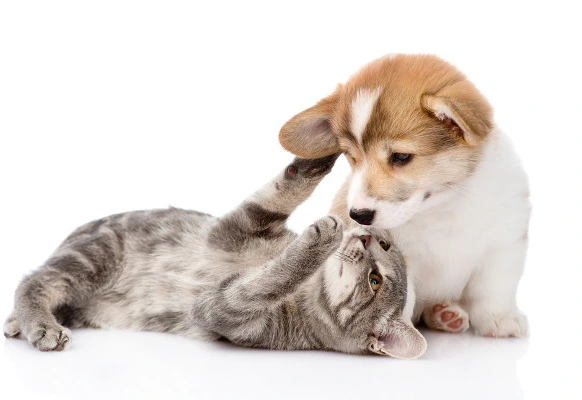
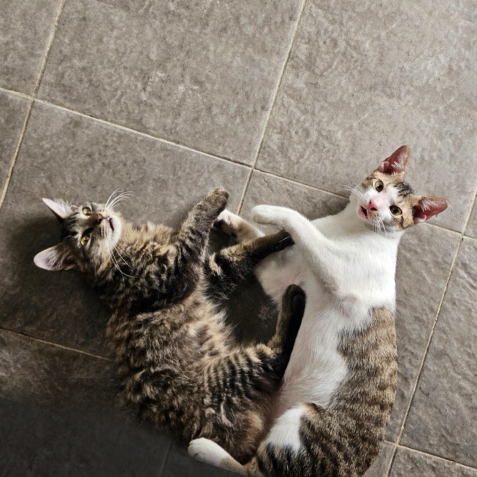
There are many clever ways to describe the challenge of keeping a chaotic or uncontrollable situation together. People who “have a lot on their plate” sometimes say they “have lots of plates spinning.” Others will “juggle several balls in the air” or “play whack a mole.” Our favorite phrase for being overwhelmed? “Herding cats!”
We aren’t the only ones who love this analogy. Cat Herder’s Day was established on December 15 for anyone who feels like they’re shepherding a flock of stray kitties (metaphorically, of course). But, more literally, many of our Nationwide pet families have an actual feline herd of their own at home. Of the nearly 250,000 cats protected by Nationwide pet insurance, more than 90,000 live in a home with a fellow feline (or felines). Of course, adding more cats requires more cat naming, which is where we come in.
Whether you tend toward the conventional or the decidedly wacky, certain trends emerge when the number of cats rises. We investigated our data to see if there were any claws and effect on naming in multi-cat households.
Sometimes one cat isn’t enough
When it comes to naming cats, there are a few purr-ennially popular choices. Top of the list is commonly Luna, a favorite for both dogs and cats. Reason would lead you to believe that the second most common name on the list would be the most common name for the second cat added to a home—but the data suggests otherwise!
In fact, there are notable variances in our most popular cat name list for a second or third feline. Second cats have a higher chance of being named Bella, Charlie, Loki, Willow or Simba than first cats, which all come later in the most popular names list. Third cats have a higher chance of being a Lily or a Pepper, neither of which crack the top 10 names list.
Naming several cats inspires surprising nuances, but you don’t need to be creative when it comes to protecting multiple pets. Nationwide offers a 5% multi-pet discount for 2- and 3-pet households to make expanding coverage to the whole furry, feathery and scaly family affordable.
Sometimes three cats aren’t enough
Large groups of cats have their own energy and chaos—and with that comes even more uniqueness in common names. The fourth, fifth or sixth cat—or even 17th cat in a household (the highest number we have in our data)—has a higher chance of being a Milo, Lucy, Loki, Smokey, Salem, Shadow or Pumpkin.
More cats equals more veterinary care, which is why we offer a 10% multi-pet discount for families with 4 or more pets.
A wackier way to name numerous cats
Of course, when it comes to deciding on names for multiple cats, you can’t go wrong with a wacky twist. Many of our Wacky Pet Names nominees come from houses with multiple award-worthy wacky names in their clowder (an amazing word used to describe a group of cats).
Take for example, Cattila the Hun and Genghis Khat, two cats whose pet parents went a “steppe” above to pun up their warrior king pets. Then there’s the ensemble cast of Minerva Meowgonagall, Cleopawtra and Meowrie Purrie, only three of the creative cat pun names crafted from one household of six felines. Hungry for another? How about a heaping helping of Beef Stewart and Eggward McCheese on the side.
Not all wacky names are themed, though. Some pet families come up with original twists that stand on their own, like cat siblings Tiramisu and … Car Alarm. Or the eclectic pun mix-up of thespian Sir Catrick Stewart and “heartbreaker” Cat Benetar.
Protect your cats
Cat wrangling is tough enough without worrying about unexpected vet visits. That’s why Nationwide pet insurance offers reimbursement for eligible veterinary expenses, so you can focus on herding (and snuggling) all those kitties.
Plus, every Nationwide pet insurance policy receives 24/7 access to Nationwide VetHelpline®, a veterinary telehealth service that’s available for helpful expert advice from home—no car, no carrier, no problem. Members can download the app for free from the App Store or Google Play.*
Get a quote today at petinsurance.com.
*Except where prohibited by state law. VetHelpline is not a substitute for a visit to your primary veterinarian.