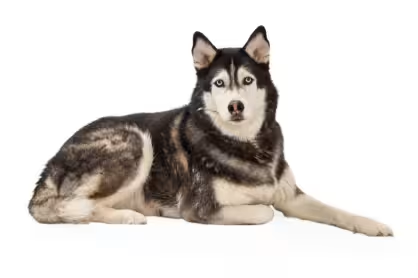
Huskies 101

Working group

Known for a wolfy look, a dense double coat that sheds in eye-popping volume, and a reputation as an escape artist, the Siberian Husky is a playful, high-energy breed that is a ton of fun to be around. If winter activities or howling at the moon are your thing, this is your dog.

What we love about Huskies

The ultimate snow country companion

Huskies tend to be independent and sometimes stubborn. Early manners training and consistent handling may help with leash-walking, otherwise don’t be surprised when your sled dog pulls you down the street. Without regular, heart-thumping exercise, Siberian Huskies may find other outlets for their energy, including digging and general destructiveness.

Energy level

100% energy level

Energy level: 100% (Very high)

Bark level

  • Very vocal
  • As needed

Bark level: Talkative. This breed vocalizes regularly but not excessively

Size

20 to 23.5 inches tall
Large breed size

Size: 20 to 23.5 inches tall. This is a Large sized Dog.

Lifespan

12 to 14 years

Lifespan: 12 to 14 years average

Weight

35 to 60 lbs

Weight: 35 to 60 lbs typical range

Energy level
Very high (100%)
Bark level
Talkative
Height
20 to 23.5 inches
Lifespan
12 to 14 years
Weight
35 to 60 lbs

The Siberian Husky stands 20 to 23.5 inches tall and weighs 35 to 60 lbs. Siberian Huskys have a lifespan of 12 to 14 years. They are known for a very high (100%) energy level and a talkative bark.

Frequently Asked Questions

How big do Siberian Huskys get?
Siberian Huskys stand 20 to 23.5 inches tall and typically weigh between 35 and 60 pounds.
How long do Siberian Huskys live?
The average lifespan of a Siberian Husky is 12 to 14 years.
Are Siberian Huskys good for first-time dog owners?
Siberian Huskys are intelligent but have high energy. They do best with experienced owners who can provide plenty of exercise and mental stimulation.
Do Siberian Huskys bark a lot?
Siberian Huskys are considered talkative — they bark more than average but are not excessively vocal.

We want to see pictures of your Husky!

Tag @NationwidePet on social media!

My pet’s health plannerSM

This Siberian Husky health planner outlines the most common medical conditions at each life stage — from puppy through senior — along with their relative risk levels. Understanding these risks can help owners plan preventive care and choose the right pet insurance coverage.

Mature adult Husky

6 years to 9 years

Risk level for common Husky conditions

Mid-life Siberian Huskys should be monitored for both joint and cardiovascular health.

40% on risk scale
Seizures
Above Average Risk
40% on risk scale
Cruciate ligament tear (knee)
Above Average Risk
40% on risk scale
Hypothyroid disease
Above Average Risk

Senior Husky

10+ years

Risk level for common Husky conditions

Senior Siberian Huskys face increased risk for serious age-related conditions. Liver cancer and Diabetes mellitus and Arthritis pose very high risk.

80% on risk scale
Liver cancer
Very High Risk
80% on risk scale
Diabetes mellitus
Very High Risk
80% on risk scale
Arthritis
Very High Risk

Husky puppy

0 to 9 months

Risk level for common Husky conditions

Siberian Husky puppies are most vulnerable during this early stage. Foreign body ingestion and Toxicity pose very high risk. Gastritis is at high risk.

80% on risk scale
Foreign body ingestion
Very High Risk
80% on risk scale
Toxicity
Very High Risk
70% on risk scale
Gastritis
High Risk

Young adult Husky

10 months to 5 years

Risk level for common Husky conditions

As Siberian Huskys grow into young adults, orthopedic and injury risks become more relevant.

40% on risk scale
Seizures
Above Average Risk
40% on risk scale
Toxicity
Above Average Risk
40% on risk scale
Foreign body ingestion
Above Average Risk

Mature adult Husky

6 years to 9 years

Risk level for common Husky conditions

Mid-life Siberian Huskys should be monitored for both joint and cardiovascular health.

40% on risk scale
Seizures
Above Average Risk
40% on risk scale
Cruciate ligament tear (knee)
Above Average Risk
40% on risk scale
Hypothyroid disease
Above Average Risk

Senior Husky

10+ years

Risk level for common Husky conditions

Senior Siberian Huskys face increased risk for serious age-related conditions. Liver cancer and Diabetes mellitus and Arthritis pose very high risk.

80% on risk scale
Liver cancer
Very High Risk
80% on risk scale
Diabetes mellitus
Very High Risk
80% on risk scale
Arthritis
Very High Risk

Husky puppy

0 to 9 months

Risk level for common Husky conditions

Siberian Husky puppies are most vulnerable during this early stage. Foreign body ingestion and Toxicity pose very high risk. Gastritis is at high risk.

80% on risk scale
Foreign body ingestion
Very High Risk
80% on risk scale
Toxicity
Very High Risk
70% on risk scale
Gastritis
High Risk

Young adult Husky

10 months to 5 years

Risk level for common Husky conditions

As Siberian Huskys grow into young adults, orthopedic and injury risks become more relevant.

40% on risk scale
Seizures
Above Average Risk
40% on risk scale
Toxicity
Above Average Risk
40% on risk scale
Foreign body ingestion
Above Average Risk
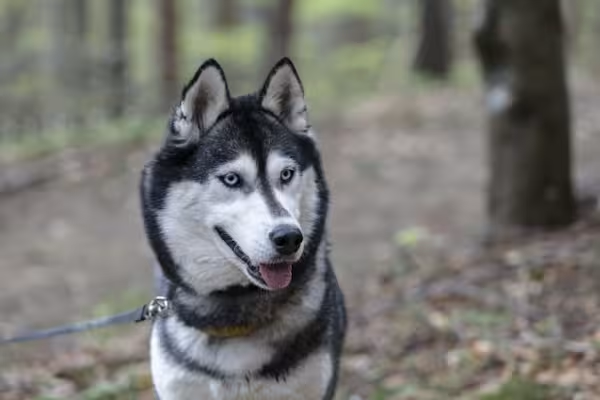
Siberian husky standing — health planner for puppies through senior dogs

Nationwide can help you save on your Siberian Husky's health care no matter what lifestage they’re in.
Puppy (0 to 9 months)
Foreign body ingestion: Very High Risk, Toxicity: Very High Risk, Gastritis: High Risk
Young Adult (10 months to 5 years)
Seizures: Above Average Risk, Toxicity: Above Average Risk, Foreign body ingestion: Above Average Risk
Mature Adult (6 years to 9 years)
Seizures: Above Average Risk, Cruciate ligament tear (knee): Above Average Risk, Hypothyroid disease: Above Average Risk
Senior (10+ years)
Liver cancer: Very High Risk, Diabetes mellitus: Very High Risk, Arthritis: Very High Risk
3-Fun fact Siberian husky GettyImages-1403659550

Siberian Huskies are known for their endurance in cold climates, and one dog became famous for just that. In 1925, Balto led his team in the final leg of a grueling sled dog relay, delivering a lifesaving serum to Nome, Alaska during a diphtheria outbreak. Balto's heroic journey made him a symbol of courage and determination, inspiring books, movies, and statues in his honor.

Siberian Husky coat care and colors

Not surprising for a dog developed to pull sleds through bitterly cold, snowy landscapes, the Siberian Husky has a lot of coat. While the breed sheds all the time, the Siberian “blows” its coat in spring and fall, dropping fur in astonishing volume. Regular brushing and combing down to the skin will reduce shedding to a decent degree, and doing it outdoors makes for easier clean-up. Acclimating puppies to having their feet handled and nails clipped or ground down is key to making future nail trims easier on everyone.

While most people probably think of these dogs with gray and white coats, they do come in nine recognized color varieties.

Husky exercise & training

Exercise level

Exercise level

Not surprising for a dog bred to pull weight over distance, the Siberian Husky enjoys exercise. Daily walks or runs are best supplemented by a variety of activities, ideally involving snow.

Trainability

Trainability

Siberian Huskies are smart and capable. They’re also interested in doing their own thing. Get a trainer’s help sooner rather than later if the going gets hard.

Group 7592

Husky fun facts

Top girl names for Huskies

100%

of Huskies are female

0%

of Huskies are male

Top boy names for Huskies

Nationwide loves Siberian Huskies of every name, from Aaron to Zog the Destroyer

Siberian Husky gender distribution
GenderPercentage
Male0%
Female100%

Among Siberian Huskys insured by Nationwide, 0% are male and 100% are female.

Siberian Husky statistics: Gender ratio is 0% male and 100% female.

Other breeds like Huskys

Best. Siberian Husky insurance. Ever.SM

  • Pet insurance premiums starting at $25/mo.
  • Visit any licensed veterinarian, anywhere
  • Cancel at any time, risk-free