
Schnauzers 101

Working group

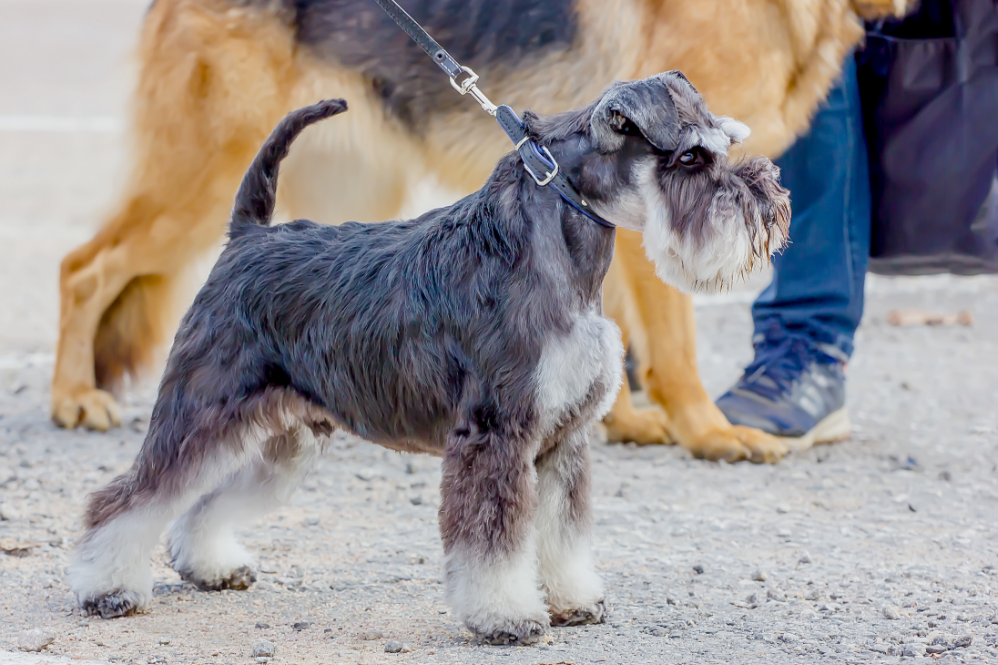
The Standard Schnauzer is the original of the three schnauzer breeds, less popular than the Miniature Schnauzer and more popular than the Giant Schnauzer. Not surprisingly, the Standard shares traits with both: A distinctively bewhiskered appearance, an alert manner and a devotion to family. They are very intelligent dogs who crave a challenge and will find trouble on their own if not kept busy.

What we love about Schnauzers

Those whiskers! Those eyebrows!

Energy level

50% energy level

Energy level: 50% (Moderate)

Bark level

  • Very vocal
  • As needed

Bark level: Talkative. This breed vocalizes regularly but not excessively

Size

17.5 to 19.5 inches tall
Medium breed size

Size: 17.5 to 19.5 inches tall. This is a Medium sized Dog.

Lifespan

13 to 16 years

Lifespan: 13 to 16 years average

Weight

30 to 45 lbs

Weight: 30 to 45 lbs typical range

Energy level
Moderate (50%)
Bark level
Talkative
Height
17.5 to 19.5 inches
Lifespan
13 to 16 years
Weight
30 to 45 lbs

The Schnauzer-Standard stands 17.5 to 19.5 inches tall and weighs 30 to 45 lbs. Schnauzer-Standards have a lifespan of 13 to 16 years. They are known for a moderate (50%) energy level and a talkative bark.

Frequently Asked Questions

How big do Schnauzer-Standards get?
Schnauzer-Standards stand 17.5 to 19.5 inches tall and typically weigh between 30 and 45 pounds.
How long do Schnauzer-Standards live?
The average lifespan of a Schnauzer-Standard is 13 to 16 years.
Are Schnauzer-Standards good for first-time dog owners?
Schnauzer-Standards have moderate energy levels and can be suitable for first-time owners who are committed to regular exercise and training.
Do Schnauzer-Standards bark a lot?
Schnauzer-Standards are considered talkative — they bark more than average but are not excessively vocal.

We want to see pictures of your Schnauzer!

Tag @NationwidePet on social media!

My pet’s health plannerSM

This Schnauzer-Standard health planner outlines the most common medical conditions at each life stage — from puppy through senior — along with their relative risk levels. Understanding these risks can help owners plan preventive care and choose the right pet insurance coverage.

Mature adult Schnauzer

5 years to 8 years

Risk level for common Schnauzer conditions

Mid-life Schnauzer-Standards should be monitored for both joint and cardiovascular health.

40% on risk scale
Hypothyroid disease
Above Average Risk
40% on risk scale
Pancreatitis
Above Average Risk
40% on risk scale
Dental disease
Above Average Risk

Senior Schnauzer

9+ years

Risk level for common Schnauzer conditions

Senior Schnauzer-Standards face increased risk for serious age-related conditions. Pancreatitis and Valvular heart disease pose very high risk.

80% on risk scale
Pancreatitis
Very High Risk
80% on risk scale
Valvular heart disease
Very High Risk
60% on risk scale
Intervertebral disc disease
Moderate Risk

Schnauzer puppy

0 to 6 months

Risk level for common Schnauzer conditions

Schnauzer-Standard puppies are most vulnerable during this early stage. Foreign body ingestion and Gastroenteritis pose very high risk. Conjunctivitis is at high risk.

80% on risk scale
Foreign body ingestion
Very High Risk
80% on risk scale
Gastroenteritis
Very High Risk
70% on risk scale
Conjunctivitis
High Risk

Young adult Schnauzer

7 months to 4 years

Risk level for common Schnauzer conditions

As Schnauzer-Standards grow into young adults, orthopedic and injury risks become more relevant.

40% on risk scale
Gastroenteritis
Above Average Risk
40% on risk scale
Foreign body ingestion
Above Average Risk
40% on risk scale
Skin allergies
Above Average Risk

Mature adult Schnauzer

5 years to 8 years

Risk level for common Schnauzer conditions

Mid-life Schnauzer-Standards should be monitored for both joint and cardiovascular health.

40% on risk scale
Hypothyroid disease
Above Average Risk
40% on risk scale
Pancreatitis
Above Average Risk
40% on risk scale
Dental disease
Above Average Risk

Senior Schnauzer

9+ years

Risk level for common Schnauzer conditions

Senior Schnauzer-Standards face increased risk for serious age-related conditions. Pancreatitis and Valvular heart disease pose very high risk.

80% on risk scale
Pancreatitis
Very High Risk
80% on risk scale
Valvular heart disease
Very High Risk
60% on risk scale
Intervertebral disc disease
Moderate Risk

Schnauzer puppy

0 to 6 months

Risk level for common Schnauzer conditions

Schnauzer-Standard puppies are most vulnerable during this early stage. Foreign body ingestion and Gastroenteritis pose very high risk. Conjunctivitis is at high risk.

80% on risk scale
Foreign body ingestion
Very High Risk
80% on risk scale
Gastroenteritis
Very High Risk
70% on risk scale
Conjunctivitis
High Risk

Young adult Schnauzer

7 months to 4 years

Risk level for common Schnauzer conditions

As Schnauzer-Standards grow into young adults, orthopedic and injury risks become more relevant.

40% on risk scale
Gastroenteritis
Above Average Risk
40% on risk scale
Foreign body ingestion
Above Average Risk
40% on risk scale
Skin allergies
Above Average Risk
Schnauzer-Standard standing — health planner for puppies through senior dogs

Nationwide can help you save on your Schnauzer-Standard's health care no matter what lifestage they’re in.
Puppy (0 to 6 months)
Foreign body ingestion: Very High Risk, Gastroenteritis: Very High Risk, Conjunctivitis: High Risk
Young Adult (7 months to 4 years)
Gastroenteritis: Above Average Risk, Foreign body ingestion: Above Average Risk, Skin allergies: Above Average Risk
Mature Adult (5 years to 8 years)
Hypothyroid disease: Above Average Risk, Pancreatitis: Above Average Risk, Dental disease: Above Average Risk
Senior (9+ years)
Pancreatitis: Very High Risk, Valvular heart disease: Very High Risk, Intervertebral disc disease: Moderate Risk
3-Fun fact-Schnauzer-Standard GettyImages-1287095184

The Standard Schnauzer is known as the Mittelschnauzer ("medium Schnauzer") in Germany.

Schnauzer-Standard coat care and colors

The wiry double coat of the Standard Schnauzer requires regular brushing to help remove any loose or damaged fur. While the Schnauzer, as with most wire-coated terriers, is traditionally and painstakingly "hand-stripped" of their outer coats, this is rarely done outside of the show world these days. For easy coat care, pet Standard Schnauzers are typically kept clipped.

Schnauzer exercise & training

Exercise level

Exercise level

The basic exercise requirement for Standard Schnauzers is a brisk daily walk, but they'll take more if you can offer it. Because they are busy dogs, be sure to include games and activities, especially indoors when the weather is bad. These smart, athletic dogs take naturally to canine sports such as agility.

Trainability

Trainability

Schnauzers are smart dogs who learn things quickly but can sometimes be distracted when in "Squirrel!" mode. Change things up by teaching tricks and other fun games to keep this bright dog engaged. Schnauzers are not usually fond of strange dogs or people, so start socialization and training early. Acclimate to nail trims early to avoid future struggles.

Schnauzer fun facts

Top girl names for Schnauzers

100%

of Schnauzers are female

0%

of Schnauzers are male

Top boy names for Schnauzers

Nationwide loves Schnauzer-Standards of every name, from Aaron to Zog the Destroyer

Schnauzer-Standard gender distribution
GenderPercentage
Male0%
Female100%

Among Schnauzer-Standards insured by Nationwide, 0% are male and 100% are female.

Schnauzer-Standard statistics: Gender ratio is 0% male and 100% female.

Other breeds like Schnauzers

Best. Schnauzer-Standard insurance. Ever.SM

  • Pet insurance premiums starting at $25/mo.
  • Visit any licensed veterinarian, anywhere
  • Cancel at any time, risk-free