
Mastiffs 101

Working group

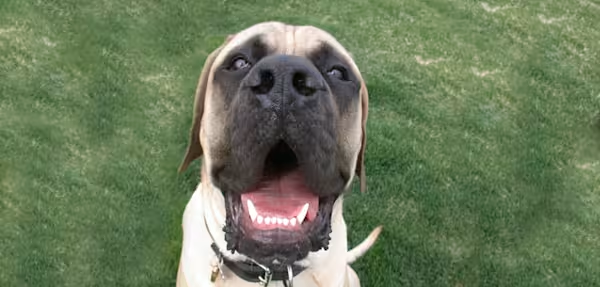
Make no mistake: The Mastiff is a very large dog; large enough to pull an adult human being off their feet or knock over children without meaning to. Fortunately, they are generally laid-back and relaxed around their people, as happy for a snuggle on the couch or bed as any other dog alive. If you have a Mastiff, be prepared for lots of comments about the size of your dog. In fact, be prepared for oversized everything!

What we love about Mastiffs

Family dog who needs lots of room on the couch

Energy level

50% energy level

Energy level: 50% (Moderate)

Bark level

  • Very vocal
  • Talkative

Bark level: As needed. This breed only barks when necessary

Size

27 to 30 inches tall
Extra large breed size

Size: 27 to 30 inches tall. This is a X large sized Dog.

Lifespan

6 to 10 years

Lifespan: 6 to 10 years average

Weight

120 to 230 lbs

Weight: 120 to 230 lbs typical range

Energy level
Moderate (50%)
Bark level
As needed
Height
27 to 30 inches
Lifespan
6 to 10 years
Weight
120 to 230 lbs

The Mastiff stands 27 to 30 inches tall and weighs 120 to 230 lbs. Mastiffs have a lifespan of 6 to 10 years. They are known for a moderate (50%) energy level and a as needed bark.

Frequently Asked Questions

How big do Mastiffs get?
Mastiffs stand 27 to 30 inches tall and typically weigh between 120 and 230 pounds.
How long do Mastiffs live?
The average lifespan of a Mastiff is 6 to 10 years.
Are Mastiffs good for first-time dog owners?
Mastiffs have moderate energy levels and can be suitable for first-time owners who are committed to regular exercise and training.
Do Mastiffs bark a lot?
Mastiffs typically only bark when necessary — they are not known to be excessive barkers.

We want to see pictures of your Mastiff!

Tag @NationwidePet on social media!

My pet’s health plannerSM

This Mastiff health planner outlines the most common medical conditions at each life stage — from puppy through senior — along with their relative risk levels. Understanding these risks can help owners plan preventive care and choose the right pet insurance coverage.

Mature adult Mastiff

4 years to 5 years

Risk level for common Mastiff conditions

Mid-life Mastiffs should be monitored for both joint and cardiovascular health. Cruciate ligament tear (knee) poses very high risk.

80% on risk scale
Cruciate ligament tear (knee)
Very High Risk
60% on risk scale
Ear infection
Moderate Risk
60% on risk scale
Hip dysplasia
Moderate Risk

Senior Mastiff

6+ years

Risk level for common Mastiff conditions

Senior Mastiffs face increased risk for serious age-related conditions. Bone cancer and Arthritis and Cruciate ligament tear (knee) pose very high risk.

80% on risk scale
Bone cancer
Very High Risk
80% on risk scale
Arthritis
Very High Risk
80% on risk scale
Cruciate ligament tear (knee)
Very High Risk

Mastiff puppy

0 to 15 months

Risk level for common Mastiff conditions

Mastiff puppies are most vulnerable during this early stage. Gastric dilatation and volvulus (GDV) poses very high risk. Hip dysplasia and Foreign body ingestion are at high risk.

80% on risk scale
Gastric dilatation and volvulus (GDV)
Very High Risk
70% on risk scale
Hip dysplasia
High Risk
70% on risk scale
Foreign body ingestion
High Risk

Young adult Mastiff

16 months to 3 years

Risk level for common Mastiff conditions

As Mastiffs grow into young adults, orthopedic and injury risks become more relevant. Gastric dilatation and volvulus (GDV) and Entropion pose very high risk. Cruciate ligament tear (knee) is at high risk.

80% on risk scale
Gastric dilatation and volvulus (GDV)
Very High Risk
80% on risk scale
Entropion
Very High Risk
70% on risk scale
Cruciate ligament tear (knee)
High Risk

Mature adult Mastiff

4 years to 5 years

Risk level for common Mastiff conditions

Mid-life Mastiffs should be monitored for both joint and cardiovascular health. Cruciate ligament tear (knee) poses very high risk.

80% on risk scale
Cruciate ligament tear (knee)
Very High Risk
60% on risk scale
Ear infection
Moderate Risk
60% on risk scale
Hip dysplasia
Moderate Risk

Senior Mastiff

6+ years

Risk level for common Mastiff conditions

Senior Mastiffs face increased risk for serious age-related conditions. Bone cancer and Arthritis and Cruciate ligament tear (knee) pose very high risk.

80% on risk scale
Bone cancer
Very High Risk
80% on risk scale
Arthritis
Very High Risk
80% on risk scale
Cruciate ligament tear (knee)
Very High Risk

Mastiff puppy

0 to 15 months

Risk level for common Mastiff conditions

Mastiff puppies are most vulnerable during this early stage. Gastric dilatation and volvulus (GDV) poses very high risk. Hip dysplasia and Foreign body ingestion are at high risk.

80% on risk scale
Gastric dilatation and volvulus (GDV)
Very High Risk
70% on risk scale
Hip dysplasia
High Risk
70% on risk scale
Foreign body ingestion
High Risk

Young adult Mastiff

16 months to 3 years

Risk level for common Mastiff conditions

As Mastiffs grow into young adults, orthopedic and injury risks become more relevant. Gastric dilatation and volvulus (GDV) and Entropion pose very high risk. Cruciate ligament tear (knee) is at high risk.

80% on risk scale
Gastric dilatation and volvulus (GDV)
Very High Risk
80% on risk scale
Entropion
Very High Risk
70% on risk scale
Cruciate ligament tear (knee)
High Risk
Mastiff standing — health planner for puppies through senior dogs

Nationwide can help you save on your Mastiff's health care no matter what lifestage they’re in.
Puppy (0 to 15 months)
Gastric dilatation and volvulus (GDV): Very High Risk, Hip dysplasia: High Risk, Foreign body ingestion: High Risk
Young Adult (16 months to 3 years)
Gastric dilatation and volvulus (GDV): Very High Risk, Entropion: Very High Risk, Cruciate ligament tear (knee): High Risk
Mature Adult (4 years to 5 years)
Cruciate ligament tear (knee): Very High Risk, Ear infection: Moderate Risk, Hip dysplasia: Moderate Risk
Senior (6+ years)
Bone cancer: Very High Risk, Arthritis: Very High Risk, Cruciate ligament tear (knee): Very High Risk
Mastiff introduction

The Mastiff was mentioned by Chaucer in his "Canterbury Tales," written in the 14th century.

Mastiff coat care and colors

Dealing with drool is the biggest grooming issue these dogs have, so you'll want to have towels handy wherever you go. Aside from that, the Mastiff's coat is relatively easy to care for, needing little more than brushing a couple of times a week and a bit more during shedding seasons.

Mastiff exercise & training

Exercise level

Exercise level

Mastiffs neither need nor want much in the way of exercise. They are happy to relax while keeping an eye on things, but will rise to the occasion should they perceive a threat to their family. They do need exercise even if they don’t really think they do; regular walks will fit the bill.

Trainability

Trainability

As with many breeds developed to make decisions on their own, Mastiffs may not be especially interested in your guidance. They are, however, devoted dogs and will be willing to listen if you make it worth their while with praise and treats. Because of their immense size, early socialization and training is a must.

Mastiff fun facts

Top girl names for Mastiffs

100%

of Mastiffs are female

0%

of Mastiffs are male

Top boy names for Mastiffs

Nationwide loves Mastiffs of every name, from Aaron to Zog the Destroyer

Mastiff gender distribution
GenderPercentage
Male0%
Female100%

Among Mastiffs insured by Nationwide, 0% are male and 100% are female.

Mastiff statistics: Gender ratio is 0% male and 100% female.

Other breeds like Mastiffs

Best. Mastiff insurance. Ever.SM

  • Pet insurance premiums starting at $25/mo.
  • Visit any licensed veterinarian, anywhere
  • Cancel at any time, risk-free