

Great Pyrenees
Laid-back but courageous when needed


Pyrs 101
Working groupThe Great Pyrenees, the most popular of the livestock guardian breeds, is a laid-back dog that is nonetheless athletic and alert when it perceives a threat to those under their protection. They are intelligent but not particularly obedient, with good reason. They were developed to think for themselves and often believe they know what's best for those they're "protecting." Those who understand the breed love them for their calm and protective nature, and let them be the dog they're meant to be. Because of their size and strength, early socialization and training are essential to helping them live in family environments.
 What we love about Pyrs

Devoted and loving to their flocks and families


- As needed



My pet’s health plannerSM
Mature adult Pyr
Risk level for common Pyr conditions

Cruciate ligament tear (knee)
Ear infection
Skin allergies
Senior Pyr
Risk level for common Pyr conditions
Arthritis
Cruciate ligament tear (knee)
Skin cancer
Pyr puppy
Risk level for common Pyr conditions
Ear infection
Gastroenteritis
Trauma
Young adult Pyr
Risk level for common Pyr conditions
Ear infection
Gastric dilatation and volvulus (GDV)
Hip dysplasia
Mature adult Pyr
Risk level for common Pyr conditions
Cruciate ligament tear (knee)
Ear infection
Skin allergies
Senior Pyr
Risk level for common Pyr conditions
Arthritis
Cruciate ligament tear (knee)
Skin cancer
Pyr puppy
Risk level for common Pyr conditions
Ear infection
Gastroenteritis
Trauma
Young adult Pyr
Risk level for common Pyr conditions
Ear infection
Gastric dilatation and volvulus (GDV)
Hip dysplasia
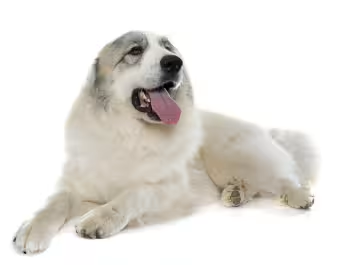
Nationwide can help you save on your Great Pyrenees's health care no matter what lifestage they’re in.
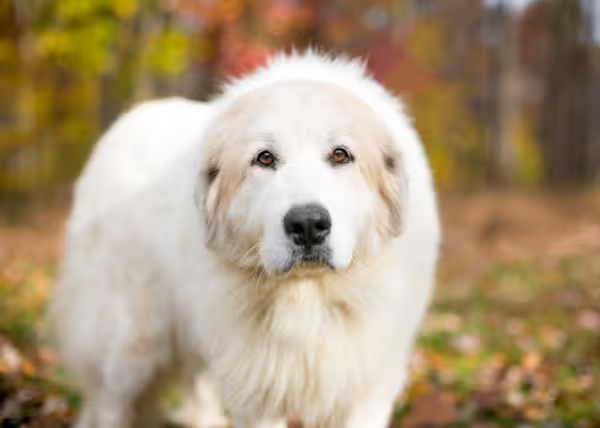
In their native land, the breed is aptly known as "Le Grande Chien des Montagnes" – the Big Dog of the Mountains.
Great Pyrenees coat care and colors
No surprise for a breed developed to live outside in the Pyrenees mountains between France and Spain, the Pyr has a thick double coat that requires regular brushing and combing to minimize shedding. Because of their size, it's wise to teach puppies to accept nail trims while they're small.
How do I take care of my Great Pyrenees fur?
How do I take care of my Great Pyrenees fur?
Should I cut the hair of my Great Pyrenees?
Should I cut the hair of my Great Pyrenees?
What kind of brush should I use on my Great Pyrenees?
What kind of brush should I use on my Great Pyrenees?
Pyr exercise & training
Pyr fun facts
Top girl names for Pyrs
of Pyrs are female
of Pyrs are male
Top boy names for Pyrs
Nationwide loves Great Pyreneess of every name, from Aaron to Zog the Destroyer
Other breeds like Pyrs
Best. Great Pyrenees insurance. Ever.SM
- Pet insurance premiums starting at $25/mo.
- Visit any licensed veterinarian, anywhere
- Cancel at any time, risk-free