German Shepherds 101

Herding group

Courage, intelligence and athleticism are the standout qualities of the German Shepherd Dog, a versatile breed popular as a reliable partner in military and law enforcement, as well as a devoted, protective family dog. The German Shepherd is also common in search-and-rescue work and dog sports.

Despite their reputation for seriousness, they can be playful, even silly, with their people. A sense of humor is required for their families, too, along with a powerful vacuum cleaner for a breed lovingly called the “German Shedder.”

What we love about German Shepherds

Versatile breed with dry sense of humor

GSDs have split into two types, with the arch-backed show-line dogs often criticized for structural issues uncommon in the working line dogs. Both types do best with consistent, clear training and handling.

Energy level

100% energy level

Energy level: 100% (Very high)

Bark level

  • Very vocal
  • Talkative

Bark level: As needed. This breed only barks when necessary

Size

22 to 26 inches tall
Large breed size

Size: 22 to 26 inches tall. This is a Large sized Dog.

Lifespan

7 to 10 years

Lifespan: 7 to 10 years average

Weight

50 to 90 lbs

Weight: 50 to 90 lbs typical range

Energy level
Very high (100%)
Bark level
As needed
Height
22 to 26 inches
Lifespan
7 to 10 years
Weight
50 to 90 lbs

The German Shepherd stands 22 to 26 inches tall and weighs 50 to 90 lbs. German Shepherds have a lifespan of 7 to 10 years. They are known for a very high (100%) energy level and a as needed bark.

Frequently Asked Questions

How big do German Shepherds get?
German Shepherds stand 22 to 26 inches tall and typically weigh between 50 and 90 pounds.
How long do German Shepherds live?
The average lifespan of a German Shepherd is 7 to 10 years.
Are German Shepherds good for first-time dog owners?
German Shepherds are intelligent but have high energy. They do best with experienced owners who can provide plenty of exercise and mental stimulation.
Do German Shepherds bark a lot?
German Shepherds typically only bark when necessary — they are not known to be excessive barkers.

We want to see pictures of your German Shepherd!

Tag @NationwidePet on social media!

My pet’s health plannerSM

This German Shepherd health planner outlines the most common medical conditions at each life stage — from puppy through senior — along with their relative risk levels. Understanding these risks can help owners plan preventive care and choose the right pet insurance coverage.

Mature adult German Shepherd

5 years to 8 years

Risk level for common German Shepherd conditions

Mid-life German Shepherds should be monitored for both joint and cardiovascular health. Exocrine pancreatitic insufficiency and Hip dysplasia pose very high risk. Gastric dilatation and volvulus (GDV) is at high risk.

80% on risk scale
Exocrine pancreatitic insufficiency
Very High Risk
80% on risk scale
Hip dysplasia
Very High Risk
70% on risk scale
Gastric dilatation and volvulus (GDV)
High Risk

Senior German Shepherd

9+ years

Risk level for common German Shepherd conditions

Senior German Shepherds face increased risk for serious age-related conditions. Splenic cancer and Gastric dilatation and volvulus (GDV) and Hip dysplasia pose very high risk.

80% on risk scale
Splenic cancer
Very High Risk
80% on risk scale
Gastric dilatation and volvulus (GDV)
Very High Risk
80% on risk scale
Hip dysplasia
Very High Risk

German Shepherd puppy

0 to 1 year

Risk level for common German Shepherd conditions

German Shepherd puppies are most vulnerable during this early stage. Umbilical hernia and Hip dysplasia pose very high risk.

80% on risk scale
Umbilical hernia
Very High Risk
80% on risk scale
Hip dysplasia
Very High Risk
60% on risk scale
Trauma
Moderate Risk

Young adult German Shepherd

1 year to 4 years

Risk level for common German Shepherd conditions

As German Shepherds grow into young adults, orthopedic and injury risks become more relevant. Exocrine pancreatitic insufficiency poses very high risk.

80% on risk scale
Exocrine pancreatitic insufficiency
Very High Risk
60% on risk scale
Hip dysplasia
Moderate Risk
40% on risk scale
Skin allergies
Above Average Risk

Mature adult German Shepherd

5 years to 8 years

Risk level for common German Shepherd conditions

Mid-life German Shepherds should be monitored for both joint and cardiovascular health. Exocrine pancreatitic insufficiency and Hip dysplasia pose very high risk. Gastric dilatation and volvulus (GDV) is at high risk.

80% on risk scale
Exocrine pancreatitic insufficiency
Very High Risk
80% on risk scale
Hip dysplasia
Very High Risk
70% on risk scale
Gastric dilatation and volvulus (GDV)
High Risk

Senior German Shepherd

9+ years

Risk level for common German Shepherd conditions

Senior German Shepherds face increased risk for serious age-related conditions. Splenic cancer and Gastric dilatation and volvulus (GDV) and Hip dysplasia pose very high risk.

80% on risk scale
Splenic cancer
Very High Risk
80% on risk scale
Gastric dilatation and volvulus (GDV)
Very High Risk
80% on risk scale
Hip dysplasia
Very High Risk

German Shepherd puppy

0 to 1 year

Risk level for common German Shepherd conditions

German Shepherd puppies are most vulnerable during this early stage. Umbilical hernia and Hip dysplasia pose very high risk.

80% on risk scale
Umbilical hernia
Very High Risk
80% on risk scale
Hip dysplasia
Very High Risk
60% on risk scale
Trauma
Moderate Risk

Young adult German Shepherd

1 year to 4 years

Risk level for common German Shepherd conditions

As German Shepherds grow into young adults, orthopedic and injury risks become more relevant. Exocrine pancreatitic insufficiency poses very high risk.

80% on risk scale
Exocrine pancreatitic insufficiency
Very High Risk
60% on risk scale
Hip dysplasia
Moderate Risk
40% on risk scale
Skin allergies
Above Average Risk
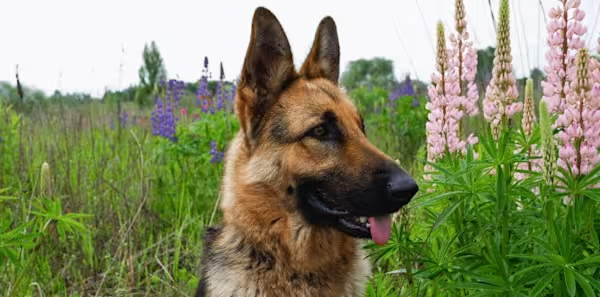
German shpeherd standing — health planner for puppies through senior dogs

Nationwide can help you save on your German Shepherd's health care no matter what lifestage they’re in.
Puppy (0 to 1 year)
Umbilical hernia: Very High Risk, Hip dysplasia: Very High Risk, Trauma: Moderate Risk
Young Adult (1 year to 4 years)
Exocrine pancreatitic insufficiency: Very High Risk, Hip dysplasia: Moderate Risk, Skin allergies: Above Average Risk
Mature Adult (5 years to 8 years)
Exocrine pancreatitic insufficiency: Very High Risk, Hip dysplasia: Very High Risk, Gastric dilatation and volvulus (GDV): High Risk
Senior (9+ years)
Splenic cancer: Very High Risk, Gastric dilatation and volvulus (GDV): Very High Risk, Hip dysplasia: Very High Risk
1-Hero German shepherd GettyImages-1401402896

Rin Tin Tin, a German Shepherd Dog rescued from a bombed-out kennel in World War I, was the first canine celebrity of the modern media age. He was so popular that a late rule change was put in place to prevent him from winning the first Academy Award for Best Actor.

German Shepherd coat care and colors

Ask anyone with a German Shepherd Dog how much they shed and chances are you’ll be told that the breed’s nickname is “German Shedder.” These dogs do shed an astonishing amount, as brushing sometimes ends with a pile of fur larger than many smaller dogs. The only way to fight it is by brushing and combing to get loose fur before it ends up on furniture, rugs, clothes … well, everything, really. Combing down to the skin is essential to prevent matting. German Shepherds are stoic dogs, so they may be more tolerant of nail trims than many other dogs. Acclimating puppies to having their feet handled and nails clipped or ground down is key to making future nail trims easier on everyone.

German Shepherd exercise & training

Exercise level

Exercise level

The German Shepherd needs regular heart-thumping activity. Because of their intelligence and their watchful nature, ideal exercise involves their brains as well their bodies.

Trainability

Trainability

Consistency is key to the German Shepherd: If you’re not their leader, they’ll be yours. Training that rewards good manners is a must.

Group 7501

German Shepherd fun facts

Top girl names for German Shepherds

100%

of German Shepherds are female

0%

of German Shepherds are male

Top boy names for German Shepherds

Nationwide loves German Shepherds of every name, from Aaron to Zog the Destroyer

German Shepherd gender distribution
GenderPercentage
Male0%
Female100%

Among German Shepherds insured by Nationwide, 0% are male and 100% are female.

German Shepherd statistics: Gender ratio is 0% male and 100% female.

Other breeds like German Shepherds

Best. German Shepherd insurance. Ever.SM

  • Pet insurance premiums starting at $25/mo.
  • Visit any licensed veterinarian, anywhere
  • Cancel at any time, risk-free