

Bullmastiff
Formidable and protective


Bullmastiffs 101
Working groupThe Bullmastiff is a strong, protective breed that thrives in the hands of those experienced with guardian dogs. They are intelligent, active and devoted to their families, although they're not fond of strangers. And while they love their families, they may be too physical and large to be recommended for families with small children. This is not a breed for beginners, but those who can handle it will enjoy the company of a dog who'll never back down from a threat.
 What we love about Bullmastiffs

Giant breed with a strong urge to protect


- As needed




My pet’s health plannerSM
Mature adult Bullmastiff
Risk level for common Bullmastiff conditions

Cruciate ligament tear (knee)
Hypothyroid disease
Skin cancer
Senior Bullmastiff
Risk level for common Bullmastiff conditions
Lymphatic cancer
Skin cancer
Splenic cancer
Bullmastiff puppy
Risk level for common Bullmastiff conditions
Ear infection
Foreign body ingestion
Gastroenteritis
Young adult Bullmastiff
Risk level for common Bullmastiff conditions
Cruciate ligament tear (knee)
Ear infection
Gastric dilatation and volvulus (GDV)
Mature adult Bullmastiff
Risk level for common Bullmastiff conditions
Cruciate ligament tear (knee)
Hypothyroid disease
Skin cancer
Senior Bullmastiff
Risk level for common Bullmastiff conditions
Lymphatic cancer
Skin cancer
Splenic cancer
Bullmastiff puppy
Risk level for common Bullmastiff conditions
Ear infection
Foreign body ingestion
Gastroenteritis
Young adult Bullmastiff
Risk level for common Bullmastiff conditions
Cruciate ligament tear (knee)
Ear infection
Gastric dilatation and volvulus (GDV)
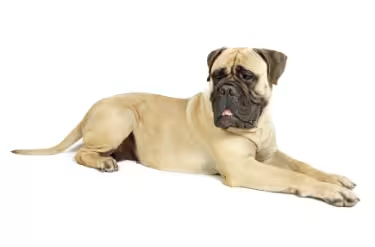
Nationwide can help you save on your Bullmastiff's health care no matter what lifestage they’re in.
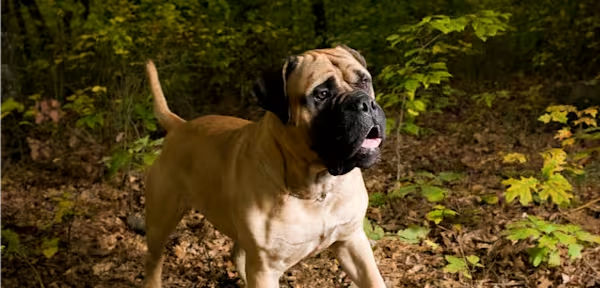
Known as "The Gamekeepers Night Dog," this massive breed was originally a cross between Mastiffs and old-school English Bulldogs.
Bullmastiff coat care and colors
Nothing could be easier. Weekly brushing and regular nail-trims (get them used to it early) take care of most grooming needs. Keep any skin folds clean and dry, and check regularly for odors, irritation or redness.
How often should I bathe my Bullmastiff?
How often should I bathe my Bullmastiff?
How often should I brush my Bullmastiff?
How often should I brush my Bullmastiff?
What kind of coat does my Bullmastiff have?
What kind of coat does my Bullmastiff have?
Bullmastiff exercise & training
Bullmastiff fun facts
Top girl names for Bullmastiffs
of Bullmastiffs are female
of Bullmastiffs are male
Top boy names for Bullmastiffs
Nationwide loves Bullmastiffs of every name, from Aaron to Zog the Destroyer
Other breeds like Bullmastiffs
Best. Bullmastiff insurance. Ever.SM
- Pet insurance premiums starting at $25/mo.
- Visit any licensed veterinarian, anywhere
- Cancel at any time, risk-free