Berners 101

Working group

The Bernese Mountain Dog is one the giant Swiss breeds developed as a Alpine farm and cart dogs. Today, these gentle dogs with distinctive markings are a popular breed with families who have some room. They are intelligent, eager to please and relatively easy to train.

What we love about Berners

Gentle giant makes a great kid companion.

While Berners may once have guarded their homes and people, today they are usually friendly towards all. They are good with other family pets and adore children. Early socialization and manners training is necessary to prevent pulling on leash as adults. They are perfect for active families, especially those who enjoy outdoor winter recreation.

Energy level

75% energy level

Energy level: 75% (High)

Bark level

  • Very vocal
  • Talkative

Bark level: As needed. This breed only barks when necessary

Size

23 to 28 inches tall
Extra large breed size

Size: 23 to 28 inches tall. This is a X large sized Dog.

Lifespan

7 to 10 years

Lifespan: 7 to 10 years average

Weight

70 to 115 lbs

Weight: 70 to 115 lbs typical range

Energy level
High (75%)
Bark level
As needed
Height
23 to 28 inches
Lifespan
7 to 10 years
Weight
70 to 115 lbs

The Bernese Mountain Dog stands 23 to 28 inches tall and weighs 70 to 115 lbs. Bernese Mountain Dogs have a lifespan of 7 to 10 years. They are known for a high (75%) energy level and a as needed bark.

Frequently Asked Questions

How big do Bernese Mountain Dogs get?
Bernese Mountain Dogs stand 23 to 28 inches tall and typically weigh between 70 and 115 pounds.
How long do Bernese Mountain Dogs live?
The average lifespan of a Bernese Mountain Dog is 7 to 10 years.
Are Bernese Mountain Dogs good for first-time dog owners?
Bernese Mountain Dogs are intelligent but have high energy. They do best with experienced owners who can provide plenty of exercise and mental stimulation.
Do Bernese Mountain Dogs bark a lot?
Bernese Mountain Dogs typically only bark when necessary — they are not known to be excessive barkers.

We want to see pictures of your Berner!

Tag @NationwidePet on social media!

My pet’s health plannerSM

This Bernese Mountain Dog health planner outlines the most common medical conditions at each life stage — from puppy through senior — along with their relative risk levels. Understanding these risks can help owners plan preventive care and choose the right pet insurance coverage.

Mature adult Berner

5 years to 7 years

Risk level for common Berner conditions

Mid-life Bernese Mountain Dogs should be monitored for both joint and cardiovascular health. Gastric dilatation and volvulus (GDV) poses very high risk. Cruciate ligament tear (knee) is at high risk.

80% on risk scale
Gastric dilatation and volvulus (GDV)
Very High Risk
70% on risk scale
Cruciate ligament tear (knee)
High Risk
40% on risk scale
Foreign body ingestion
Above Average Risk

Senior Berner

8+ years

Risk level for common Berner conditions

Senior Bernese Mountain Dogs face increased risk for serious age-related conditions. Bone cancer and Lymphatic cancer and Splenic cancer pose very high risk.

80% on risk scale
Bone cancer
Very High Risk
80% on risk scale
Lymphatic cancer
Very High Risk
80% on risk scale
Splenic cancer
Very High Risk

Berner puppy

0 to 1 year

Risk level for common Berner conditions

Bernese Mountain Dog puppies are most vulnerable during this early stage. Umbilical hernia and Foreign body ingestion pose very high risk. Gastritis is at high risk.

80% on risk scale
Umbilical hernia
Very High Risk
80% on risk scale
Foreign body ingestion
Very High Risk
70% on risk scale
Gastritis
High Risk

Young adult Berner

1 year to 4 years

Risk level for common Berner conditions

As Bernese Mountain Dogs grow into young adults, orthopedic and injury risks become more relevant. Hip dysplasia is at high risk.

70% on risk scale
Hip dysplasia
High Risk
60% on risk scale
Foreign body ingestion
Moderate Risk
60% on risk scale
Ear infection
Moderate Risk

Mature adult Berner

5 years to 7 years

Risk level for common Berner conditions

Mid-life Bernese Mountain Dogs should be monitored for both joint and cardiovascular health. Gastric dilatation and volvulus (GDV) poses very high risk. Cruciate ligament tear (knee) is at high risk.

80% on risk scale
Gastric dilatation and volvulus (GDV)
Very High Risk
70% on risk scale
Cruciate ligament tear (knee)
High Risk
40% on risk scale
Foreign body ingestion
Above Average Risk

Senior Berner

8+ years

Risk level for common Berner conditions

Senior Bernese Mountain Dogs face increased risk for serious age-related conditions. Bone cancer and Lymphatic cancer and Splenic cancer pose very high risk.

80% on risk scale
Bone cancer
Very High Risk
80% on risk scale
Lymphatic cancer
Very High Risk
80% on risk scale
Splenic cancer
Very High Risk

Berner puppy

0 to 1 year

Risk level for common Berner conditions

Bernese Mountain Dog puppies are most vulnerable during this early stage. Umbilical hernia and Foreign body ingestion pose very high risk. Gastritis is at high risk.

80% on risk scale
Umbilical hernia
Very High Risk
80% on risk scale
Foreign body ingestion
Very High Risk
70% on risk scale
Gastritis
High Risk

Young adult Berner

1 year to 4 years

Risk level for common Berner conditions

As Bernese Mountain Dogs grow into young adults, orthopedic and injury risks become more relevant. Hip dysplasia is at high risk.

70% on risk scale
Hip dysplasia
High Risk
60% on risk scale
Foreign body ingestion
Moderate Risk
60% on risk scale
Ear infection
Moderate Risk
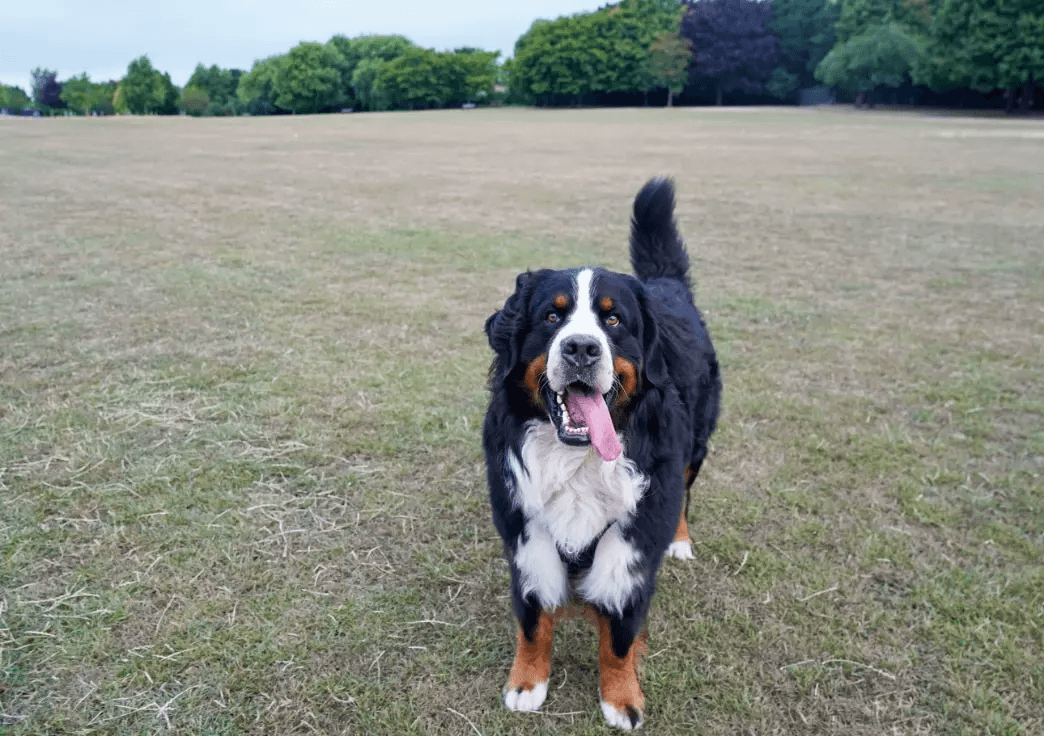
Bernese mountain dog standing — health planner for puppies through senior dogs

Nationwide can help you save on your Bernese Mountain Dog's health care no matter what lifestage they’re in.
Puppy (0 to 1 year)
Umbilical hernia: Very High Risk, Foreign body ingestion: Very High Risk, Gastritis: High Risk
Young Adult (1 year to 4 years)
Hip dysplasia: High Risk, Foreign body ingestion: Moderate Risk, Ear infection: Moderate Risk
Mature Adult (5 years to 7 years)
Gastric dilatation and volvulus (GDV): Very High Risk, Cruciate ligament tear (knee): High Risk, Foreign body ingestion: Above Average Risk
Senior (8+ years)
Bone cancer: Very High Risk, Lymphatic cancer: Very High Risk, Splenic cancer: Very High Risk
mountain-dog-gettyimages-1411962949

The Bernese Mountain Dog was once called the Durrbachler, after the Durrbach region near the Swiss city of Bern. They’ve also been called the Berner Sennenhund, German for “Alpine herder’s dog from Bern.” The breed’s markings did not go unnoticed in naming: Gelbbackler or “yellow cheeks” was one name, as was Vierauger, which means “four eyes,” referring to tan spots over the eyes.

Bernese Mountain Dog coat care and colors

As befitting a breed originating from the Swiss Alps, the Bernese Mountain Dog has a lot of coat, both a downy undercoat and a weather-resistant overcoat. While the breed sheds all the time, the Berner sheds most heavily in spring and fall, and because of their size, that means a lot of fur. Regular brushing and combing down to the skin will reduce shedding to a decent degree. Do it outdoors for easier clean-up.

Because Bernese Mountain Dogs are such large adults, nail trims may become wrestling matches in which the Berner has the upper paw. Acclimating puppies to having their feet handled and nails clipped or ground down is key to making future nail trims easier on everyone.

Berner exercise & training

Exercise level

Exercise level

Male Bernese Mountain Dogs are very large and generally mellow – a good daily walk will suit them well. Female Berners are typically smaller, and enjoy more vigorous activity.

Trainability

Trainability

Bernese Mountain Dogs are easy-going, but their adult size makes it essential to start training early – especially leash manners.

Berner fun facts

Top girl names for Berners

100%

of Berners are female

0%

of Berners are male

Top boy names for Berners

Nationwide loves Bernese Mountain Dogs of every name, from Aaron to Zog the Destroyer

Bernese Mountain Dog gender distribution
GenderPercentage
Male0%
Female100%

Among Bernese Mountain Dogs insured by Nationwide, 0% are male and 100% are female.

Bernese Mountain Dog statistics: Gender ratio is 0% male and 100% female.

Other breeds like Berners

Best. Bernese Mountain Dog insurance. Ever.SM

  • Pet insurance premiums starting at $25/mo.
  • Visit any licensed veterinarian, anywhere
  • Cancel at any time, risk-free