Beagles 101

Hound group

Beagles are friendly dogs with a distinctive bark (known as a bay) whose No. 1 priority is following a hot scent while ignoring most everything and everyone else. These happy, sturdy hounds are great with kids and usually get along well with other family pets.

What we love about Beagles

That hound sound is the best around

They are smart dogs who learn things easily but consider obedience rather optional. This comes from the Beagle’s past as a hunting hound working on their own instincts, and should not be taken as an insult. A secure yard and a leash may always be necessary to keep Beagles from going their own way, although consistent manners training may help. That’s especially true if food is involved, since Beagles have a good appetite and, not too surprisingly, a tendence towards obesity that must be managed.

Energy level

100% energy level

Energy level: 100% (Very high)

Bark level

  • Very vocal
  • As needed

Bark level: Talkative. This breed vocalizes regularly but not excessively

Size

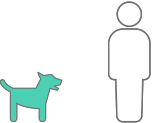
11 to 15 inches tall
Medium breed size

Size: 11 to 15 inches tall. This is a Medium sized Dog.

Lifespan

10 to 15 years

Lifespan: 10 to 15 years average

Weight

15 to 30 lbs

Weight: 15 to 30 lbs typical range

Energy level
Very high (100%)
Bark level
Talkative
Height
11 to 15 inches
Lifespan
10 to 15 years
Weight
15 to 30 lbs

The Beagle stands 11 to 15 inches tall and weighs 15 to 30 lbs. Beagles have a lifespan of 10 to 15 years. They are known for a very high (100%) energy level and a talkative bark.

Frequently Asked Questions

How big do Beagles get?
Beagles stand 11 to 15 inches tall and typically weigh between 15 and 30 pounds.
How long do Beagles live?
The average lifespan of a Beagle is 10 to 15 years.
Are Beagles good for first-time dog owners?
Beagles are intelligent but have high energy. They do best with experienced owners who can provide plenty of exercise and mental stimulation.
Do Beagles bark a lot?
Beagles are considered talkative — they bark more than average but are not excessively vocal.

We want to see pictures of your Beagle!

Tag @NationwidePet on social media!

My pet’s health plannerSM

This Beagle health planner outlines the most common medical conditions at each life stage — from puppy through senior — along with their relative risk levels. Understanding these risks can help owners plan preventive care and choose the right pet insurance coverage.

Mature adult Beagle

6 years to 9 years

Risk level for common Beagle conditions

Mid-life Beagles should be monitored for both joint and cardiovascular health. Intervertebral disc disease and Hypothyroid disease are at high risk.

70% on risk scale
Intervertebral disc disease
High Risk
70% on risk scale
Hypothyroid disease
High Risk
60% on risk scale
Seizures
Moderate Risk

Senior Beagle

10+ years

Risk level for common Beagle conditions

Senior Beagles face increased risk for serious age-related conditions. Urinary cancer and Cushings disease and Liver cancer pose very high risk.

80% on risk scale
Urinary cancer
Very High Risk
80% on risk scale
Cushings disease
Very High Risk
80% on risk scale
Liver cancer
Very High Risk

Beagle puppy

0 to 6 months

Risk level for common Beagle conditions

Beagle puppies are most vulnerable during this early stage. Ear infection and Gastritis and Urinary tract infection pose very high risk.

80% on risk scale
Ear infection
Very High Risk
80% on risk scale
Gastritis
Very High Risk
80% on risk scale
Urinary tract infection
Very High Risk

Young adult Beagle

7 months to 5 years

Risk level for common Beagle conditions

As Beagles grow into young adults, orthopedic and injury risks become more relevant. Toxicity is at moderate risk.

60% on risk scale
Toxicity
Moderate Risk
40% on risk scale
Foreign body ingestion
Above Average Risk
40% on risk scale
Ear infection
Above Average Risk

Mature adult Beagle

6 years to 9 years

Risk level for common Beagle conditions

Mid-life Beagles should be monitored for both joint and cardiovascular health. Intervertebral disc disease and Hypothyroid disease are at high risk.

70% on risk scale
Intervertebral disc disease
High Risk
70% on risk scale
Hypothyroid disease
High Risk
60% on risk scale
Seizures
Moderate Risk

Senior Beagle

10+ years

Risk level for common Beagle conditions

Senior Beagles face increased risk for serious age-related conditions. Urinary cancer and Cushings disease and Liver cancer pose very high risk.

80% on risk scale
Urinary cancer
Very High Risk
80% on risk scale
Cushings disease
Very High Risk
80% on risk scale
Liver cancer
Very High Risk

Beagle puppy

0 to 6 months

Risk level for common Beagle conditions

Beagle puppies are most vulnerable during this early stage. Ear infection and Gastritis and Urinary tract infection pose very high risk.

80% on risk scale
Ear infection
Very High Risk
80% on risk scale
Gastritis
Very High Risk
80% on risk scale
Urinary tract infection
Very High Risk

Young adult Beagle

7 months to 5 years

Risk level for common Beagle conditions

As Beagles grow into young adults, orthopedic and injury risks become more relevant. Toxicity is at moderate risk.

60% on risk scale
Toxicity
Moderate Risk
40% on risk scale
Foreign body ingestion
Above Average Risk
40% on risk scale
Ear infection
Above Average Risk
Beagle standing — health planner for puppies through senior dogs

Nationwide can help you save on your Beagle's health care no matter what lifestage they’re in.

Puppy (0 to 6 months)
Ear infection: Very High Risk, Gastritis: Very High Risk, Urinary tract infection: Very High Risk
Young Adult (7 months to 5 years)
Toxicity: Moderate Risk, Foreign body ingestion: Above Average Risk, Ear infection: Above Average Risk
Mature Adult (6 years to 9 years)
Intervertebral disc disease: High Risk, Hypothyroid disease: High Risk, Seizures: Moderate Risk
Senior (10+ years)
Urinary cancer: Very High Risk, Cushings disease: Very High Risk, Liver cancer: Very High Risk
3-Fun fact Beagle GettyImages-1064619358

Snoopy, the beagle from the comic strip "Peanuts," is an iconic fictional character. Introduced in 1950, he won hearts with his adventures and unique personality. Displaying human-like traits, Snoopy was Charlie Brown's loyal and imaginative companion. He remains a beloved symbol of Beagle charm.

Beagle coat care and colors

The coat of the Beagle is easy to care for: Sleek and short, all it needs is weekly brushing and an occasional bath. While most Beagles are black, tan, and white, the breed actually comes in almost a dozen recognized colors and patterns, and at least that many more not approved for the show ring. Among the more interesting: lemon and white, and bluetick and white.

Keeping nails short is important to the Beagle’s health. Avoid wrestling matches in adult dogs by acclimating puppies to having their feet and nails handled.

Beagle exercise & training

Exercise level

Exercise level

A Beagle is happiest following their noses for miles. Neighborhood walks are fine, but they thrive when exploring new areas with exciting smells for them to enjoy.

Trainability

Trainability

Beagles love their people, but they often disagree with them when it comes to following their noses instead of coming when called. Encourage good behavior with praise and tiny treats.

Group 7731

Beagle fun facts

Top girl names for Beagles

100%

of Beagles are female

0%

of Beagles are male

Top boy names for Beagles

Nationwide loves Beagles of every name, from Aaron to Zog the Destroyer

Beagle gender distribution
GenderPercentage
Male0%
Female100%

Among Beagles insured by Nationwide, 0% are male and 100% are female.

Beagle statistics: Gender ratio is 0% male and 100% female.

Other breeds like Beagles

Best. Beagle insurance. Ever.SM

  • Pet insurance premiums starting at $25/mo.
  • Visit any licensed veterinarian, anywhere
  • Cancel at any time, risk-free